Map the real operation
Clients, recurring work, and the people who make the day run.
Transfer readiness for owner-led businesses
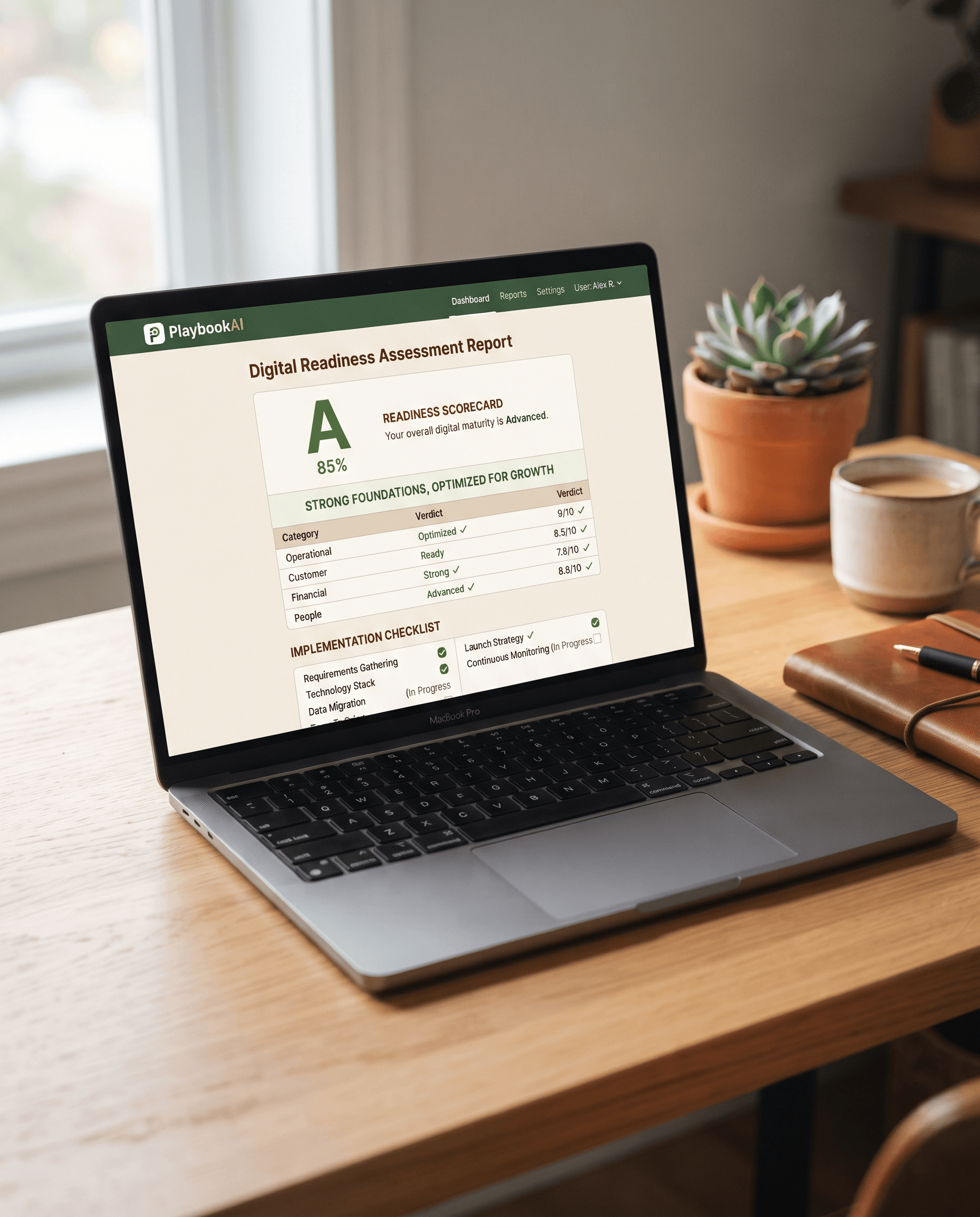
Answer 8 questions to see where your business stands on exit readiness — and which gaps matter most.
For owners, successors, and advisors making operational knowledge transferable.
The hidden transfer risk
A buyer, successor, or first manager needs more than documented steps. They need to know why Client A gets a rush-job exception, how the owner prices custom work, and which vendor to call when the primary supplier fails.
Inside the handoff
The value is often in the owner's judgment: context, exceptions, and the sequence of decisions that keeps work moving.
Illustrative playbookThe history, promises, and exceptions a successor needs before the next call.
How the owner makes judgment calls when the estimate is not in a price list.
Who to call, what to substitute, and what breaks when a familiar supplier cannot help.
The field-earned practices that keep a good business from becoming a fragile one.
Four focused conversations
The process stays close to the work. Each session follows what the owner knows, where the business depends on you personally, and what a new operator needs to do next.
Clients, recurring work, and the people who make the day run.
Pricing logic, exceptions, and the decisions that are never written down.
Vendor alternatives, dependencies, and the points where a handoff usually breaks.
A structured, usable fieldbook for the person who has to run what comes next.
The result
A clear operational record built around the moments where ownership changes hands.
From judgment to fieldbook
The output is the context, evidence, and next action that lets someone else make a sound decision.
Illustrative example · owner judgment
“We can usually fit the rush job in, but only when the client has already approved the materials.”
That sentence contains a client promise, a capacity constraint, and a condition worth preserving.
Fieldbook record
Check material approval before committing a rush slot.
Questions about the pilot
Here is what the pilot conversation is designed to clarify.
Four focused conversations follow the work as it is actually done: the promise to clients, the decisions behind the price, the dependencies that keep delivery moving, and the handoffs a new operator will need.
The pilot is designed around four focused conversations. The exact cadence is part of the pilot conversation, so the process can fit the business rather than become another system to maintain.
Start with the operating knowledge needed for continuity. The pilot conversation is the place to define what should be captured, what should stay out, and who should be able to use the finished fieldbook.
A working fieldbook organized around client context, pricing logic, vendor continuity, daily workflows, and the unwritten rules that make the operation dependable.
It is a pilot conversation for an early-stage service. The goal is to learn whether an interview-led fieldbook creates useful transfer readiness for your business.
No. A request starts a conversation about fit, timing, and the business context. It does not place an order.
Next step
Start with the Exit Readiness Assessment to find the gaps. When you're ready to close them, the pilot builds a working handoff fieldbook for the areas that matter most.